

Why ASMR is putting people to sleep
Whispering. Fingernails tapping against glass. The soft crinkle of paper. The slow, repetitive sound of a hairbrush. By now, you’ve probably encountered autonomous sensory meridian response (ASMR) somewhere online. What started as a niche corner of the internet has grown into a massive category of videos featuring everything from page turning and eating sounds to simulated haircuts and spa treatments. And for many viewers, all that listening and watching serves a purpose: winding down.
In fact, sleep remains one of the most common themes in ASMR content, according to a 2026 analysis of more than 42,000 ASMR videos on YouTube. So, what is it about these oddly satisfying sounds that has so many people pressing play before bed?
What exactly is ASMR?
ASMR describes a pleasant, sometimes tingling sensation that some people experience in response to certain sights and sounds. The feeling often begins around the scalp or neck and may be accompanied by a sense of calm and relaxation.
There’s no universal trigger. Some people respond to whispering or soft-spoken voices, while others prefer tapping, scratching, brushing, repetitive hand movements or videos that simulate personal attention like words of affirmation or care. And some people don’t experience ASMR at all. That’s part of what makes it so interesting: The sounds that help one person relax may do absolutely nothing for someone else.
Why does ASMR feel so relaxing?
Scientists are still working to understand exactly what happens when we experience ASMR, but newer research offers some interesting clues.
A 2025 study published in Cerebral Cortex compared responses to ASMR and nature videos. Researchers found that both reduced participants’ pulse rates with ASMR videos producing a greater reduction. The findings suggest there may be a measurable physiological component to the calm some viewers report experiencing.
Research into the topics of sound and sleep is growing, too. A 2025 article in the National Library of Medicine details how eight studies involving 419 participants found that different forms of acoustic stimulation showed potential for improving certain measures of insomnia and sleep quality. That doesn’t mean ASMR is a proven treatment for sleeplessness. But if certain sounds help your mind shift from go, go, go to time to wind down, they may have a place in your bedtime routine.
Find your sound for sleep
Curious? Experiment with different sounds and see what helps you relax. Maybe it’s gentle tapping or whispering. Maybe it’s rain, ocean waves or another ambient sound. Or maybe your ideal sleep soundtrack is simply silence.
Find your sound for sleep here with our curated ASMR sleep playlist.
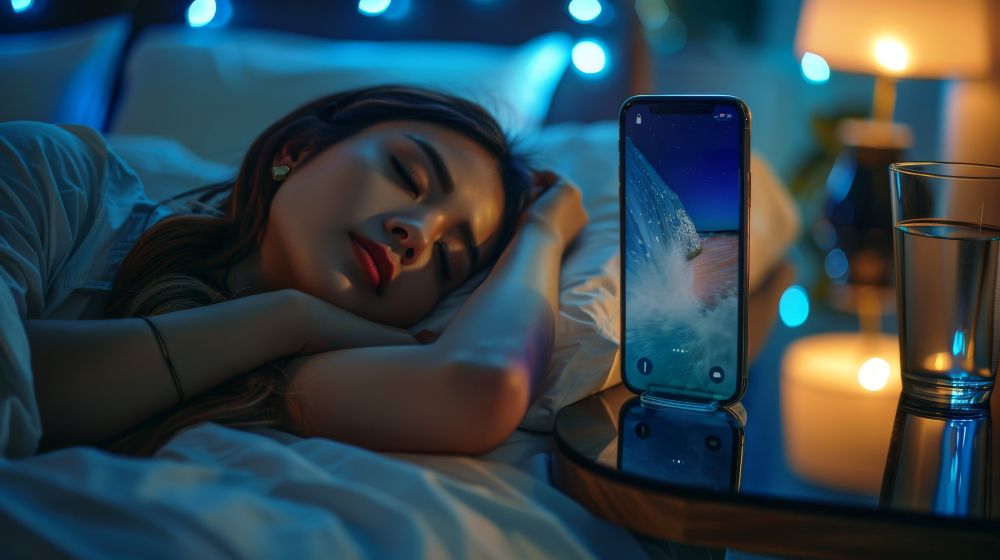
If your ASMR comes courtesy of a phone or tablet, consider listening without watching once you find a favorite. Dim the screen, keep the volume comfortable and set a sleep timer so your relaxation tool doesn’t become an all-night distraction. After all, there’s no one-size-fits-all formula for winding down. Your mattress, pillow, bedroom environment and bedtime rituals all work together to create a sleep experience that feels right for you. And if a few whispers, taps and tingles happen to be part of that formula? Sweet dreams.